
As an automotive parts importer or distributor in Colombia, your success relies on one critical factor: reliability. Sourcing from China offers massive cost and scaling advantages, but the true challenge lies in finding a manufacturing partner who understands that a vehicle driving in Bogotá faces completely different demands than one driving in Shanghai or Miami.
To build a highly profitable, low-return product line, you need to know exactly what to look for when vetting a Chinese alternator factory. Here is your technical blueprint for sourcing alternators tailored specifically to Colombia’s unique car park and demanding terrain.
1. Deep Dive: Alternator Specs for Colombia’s Top Models
In Colombia, vehicles with high demand include newly added new energy vehicles such as Tesla and BYD, as well as fuel vehicles with a large existing stock, such as Kia, Renault, Mazda, Chevrolet, and Toyota, which collectively account for 48.1% of the market share. The demand for parts of these vehicles, including generators and starters, will also be high. So, how do we find suppliers in China for these popular products?
Chevrolet (e.g., Spark, Onix, Sail, Tracker)
Chevrolet dominates the roads in Colombia, from bustling city cabs to family SUVs. However, their electrical systems are completely different. Your Chinese supplier must provide OE-matching (Original Equipment) internal components rather than generic “fits-all” alternatives.
All models adopt a 14V standard vehicle power system.
- Spark and Sail are equipped with 80A to 90A basic-output alternators.
- Onix and Tracker turbo versions use high-output units ranging from 100A to 150A.
Built with integrated voltage regulators and full-bridge rectifiers, they deliver precise voltage stabilization and strong heat resistance.
Made of lightweight aluminum housing, the alternators feature dual cooling fans for efficient heat dissipation. They come with 5PK or 6PK pulley designs and standard mounting holes, enabling direct drop-in installation.
Model Differences
- Spark: Compact size, cost-effective performance, suitable for small-displacement engines without start-stop systems.
- Sail: Stable charging performance at idle speed, ideal for frequent urban driving conditions.
- Onix: Optimized for start-stop technology, capable of sufficient power output at low engine revolutions.
- Tracker: Reinforced structure and high-load durability, reliable for long-distance and mountain road driving.
Core Selling Points
- Excellent compatibility with start-stop systems, effectively preventing power loss during idling.
- High power density design, compact dimension with powerful power supply capacity.
- Stable performance under high ambient temperatures, perfectly fit for tropical and high-temperature regions.
- Durable bearings and carbon brushes, service life reaches over 150,000 kilometers.
- Identical mounting position and connector specification as original parts for easy replacement.
Common OE Numbers
- Onix & Tracker 1.0T: F000BL07TA, 26261634
- Sail 1.4L: CVS082558, 9070278
- Spark: AL2353X, 11646A
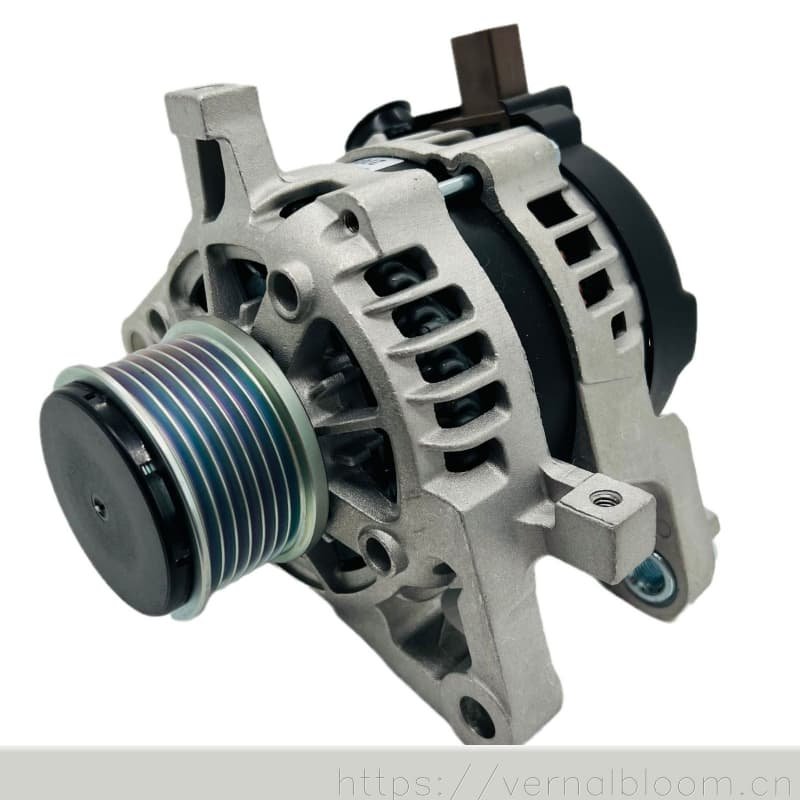
- The Challenge: Korean and American-engineered platforms used by Chevrolet rely heavily on stable voltage regulations. Compact models like the Spark use smaller, compact alternators that must output stable power despite high-frequency urban stop-and-go driving.
- What to Look For: The factory must supply alternators with smart voltage regulators (often requiring COM/LIN bus protocol communication with the Engine Control Unit). Generic regulators will instantly trigger the dashboard battery light, leading to massive customer returns.
2. Navigating Colombian Geography: The Environmental Stress Test
Colombia features some of the most diverse and punishing driving environments in the world. When negotiating with Chinese manufacturers, specify these exact environmental adaptations:
Extreme Altitude & Heat (The Andean & Coastal Challenge)
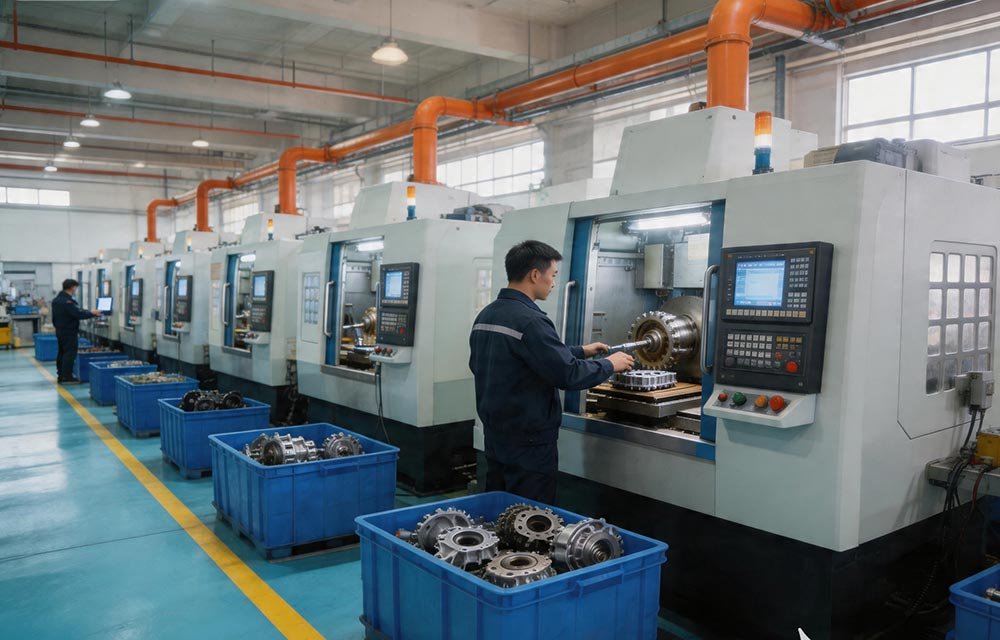
Cities like Bogotá sit over 2,600 meters above sea level, while coastal regions like Cartagena suffer from sweltering heat. High altitude means thinner air, which drastically reduces the passive cooling efficiency of an alternator. So the factory must use dual-internal cooling fans and optimized housing ventilation. The internal diodes and voltage regulators must be rated for high thermal tolerances (up to 125 degrees Celsius or 150 degrees Celsius) to avoid premature thermal breakdown.
Heavy Rain, Mud, and Flooding (The Rainy Seasons)
Unpredictable weather and sudden flooding mean alternators are constantly blasted with muddy water and road debris. Insist on sealed bearings with high-grade rubber seals. Additionally, the voltage regulator and rectifier circuit boards must be treated with a thick layer of waterproof conformal coating.
Sourcing automotive alternators from China shouldn’t be a gamble. By demanding OE-matching electronics for Chevrolet and Renault, ordering components designed to withstand Colombia’s intense geography, enforcing strict raw material standards, and verifying 100% end-of-line load testing, you will secure a product that commands premium pricing and absolute customer trust in Colombia.